
Archive

Golf ball construction can greatly impact your game. An important factor to consider when choosing golf balls is the number of layers/pieces. Golf balls can be made of up to 6 layers, although your average ball will likely feature just 2 or 3 layers.

Keep reading to find out the difference between 2 piece and 3 piece golf balls to help you choose the right ball for you.


What is a 2 piece golf ball?

2 piece golf balls have a large core or mantle with an outer layer that tends to be made from materials such as urethane or Surlyn. The cover material will determine how hard or soft the ball feels - and in turn, how much spin you can get on the ball.

Urethane has a softer feel and offers more spin control, whereas Surlyn tends to be harder and reduces spin.

A two-piece Surlyn covered ball is great for beginners and high handicappers who haven't yet mastered the skills needed to control spin and shape. These balls are also significantly cheaper, making them a wise choice if you're not yet ready to invest a lot of money in high-end golf equipment.

A 2-piece urethane ball will suit mid-level handicappers who want more control over spin, in particular with iron shots, but don’t want to spend more money on 3-layer balls.


What is a 3 piece golf ball?

3 piece golf balls comprise 3 layers: a cover, a mantle (middle layer) and a core. These balls are good for mid-low handicappers who want good spin control, prefer a softer feel around the greens, and don’t lose balls often.

Using a 3 piece ball means sacrificing distance, as it’s softer and tends to have less compression. This ball will travel less distance through the air than a 2-piece golf ball.


What’s the difference between 2 piece and 3 piece golf balls?

Here are some pros and cons of 2 piece and 3 piece golf balls:

2 piece golf balls tend to be more durable than 3 piece balls, and therefore offer better value for money.

A 3 piece golf ball is a more complex ball in its construction, and thus more expensive. It is also softer and doesn’t have the same level of durability as a 2 piece ball.

A common misconception is that 3, 4 or 5 piece balls have greater distance, but this is not true. A 2 piece ball travels further through the air when hit dead straight, but offers less control over spin/shape and feels hard to hit.

The additional layer in 3 piece balls allows for a softer feel, more spin and improved control.

Here at gimmeballs, you can filter our balls by number of layers to make it super easy for you to find the right balls for you. Simply click the link below and use the Product Filter for a more concise search.

Shop Golf Balls

what do the numbers on golf balls mean

Numbers on golf balls are usually either there to help players identify the ball, to demonstrate compression-rating, or to show dimple pattern. But how do you tell which is which? This simple guide will explain the different meanings behind golf ball numbers, and how to know what your golf ball is trying to tell you.

These numbers can be very important. In fact, the number printed on your golf ball might even impact your game!


What are the numbers on golf balls?

More often than not, if there is a number printed on your golf ball, it’ll be either a one-digit number, a two-digit number or a three-digit number. Let’s take a closer look at what these numbers mean.


One-Digit Numbers

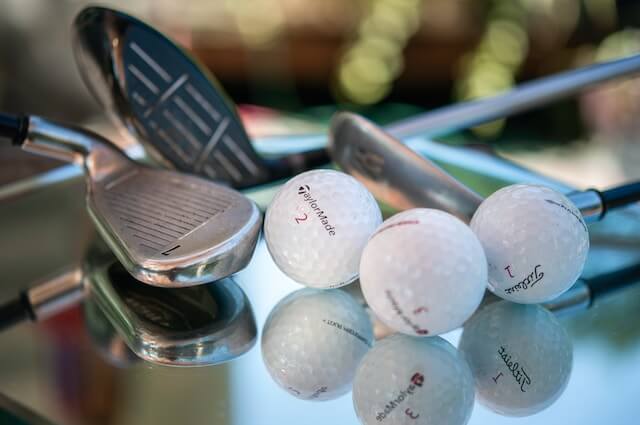
If there’s just one, single-digit number printed on your golf ball, then the number itself doesn't have a meaning. It’s just there to make it easier to identify on the course. For example, if everyone you’re playing with is using the same golf balls as you, the different numbers printed on the balls will help you to determine which ball belongs to which player. Your Pro V1s might say 2, when your competitors' balls all say 3!

Golf ball identification is pretty important. In match play, hitting the wrong ball will incur a loss of hole penalty. In stroke play, hitting someone else’s ball results in a two-stroke penalty.

Sometimes numbers aren't enough, so to make them even easier to identify, golfers will mark or personalise their balls. Purchasing personalised golf balls makes golf ball identification simple, without having to get right up close to read a tiny number.

So, if you find yourself squinting to find your ball on the course, you might want to consider purchasing some personalised golf balls.


Two-Digit Numbers

But what's the meaning of Two-digit numbers on golf balls? These numbers have a very specific meaning: they’re typically a representation of the compression rating.

Though you won't often see two-digit number on golf balls any more, you should stay aware of this, as compression ratings are very important for golfing. Compression ratings can range from low to high and different ratings are better suited to different skill levels. Golf ball compression, put simply, refers to how ‘soft’ the ball is. Low compression equals a ‘soft’ feel and high compression equals a ‘hard’ feel.

As a general rule, balls with a lower compression rating are best suited to players with a high handicap and high compression balls are better suited to more advanced players with lower handicaps. For example, low compression balls require less energy transfer from the club head to travel further. Beginner golfers and players with high handicaps often have a slower swing speed, so a low compression ball will enable them to exert the energy of their swing into optimal distance.

Therefore, the two-digit number printed on your ball has a pretty important meaning! Keep an eye out for them next time you purchase golf balls - it could have a big impact on your game.


Three-Digit Numbers

What do three-digit numbers on golf balls mean? These are the number of dimples on your golf ball!

All golf balls feature unique dimple patterns that can affect the ball’s performance in different ways. A three-digit number on a golf ball tends to signify how many dimples that ball has.

The number of dimples and the dimple pattern will vary depending on the manufacturer. Generally, a golf ball will have between 300 and 500 dimples. So, you’ll likely notice a number in this range printed on your ball.


Personalised Golf Balls

Golf ball numbers not enough for you? Personalise your golf balls. Here at gimmeballs, we stock a wide range of high-quality golf balls from top brands like Srixon, TaylorMade and Titleist. Simply choose a brand, choose a ball, then add a custom image, text or alignment line to help you identify your ball with ease or to help line up your putts.

Shop Personalised Golf Balls

why do golfers wear hats? female golfer swinging club wearing black golfing cap

To say that golfers have a distinct fashion style is an understatement! Golfers have long been identifiable by their signature button up shirts, khakis, and cap/sun visor. In fact, many golf courses have strict dress codes, and those wearing incorrect attire such as jeans will be turned away.

Whether you’re playing at your local club or watching the PGA Tour on television, you’re sure to notice the sheer number of golfers wearing traditional golfing attire, all topped off with a golfing cap. Although these fashion choices are a standard sight on the golf course, you may have found yourself wondering exactly why golfers wear hats.

What are the benefits of wearing a hat to play golf?

1) Sun protection

One of the primary functions of golf caps (and caps in general, really) is to provide protection from the sun. When we’re lucky enough to get it, the sun can be potentially dangerous when stood outside for long periods of time; the damaging UV rays can burn your face and leave you with a nasty sunburn.

When out on the golf course it can be easy not to notice the sun, especially if there’s a nice cool breeze blowing. Wearing a cap helps keep you protected from the sun at all times, even when you don’t realise you need it!

2) Improved vision on the course

In addition to keeping the sun out of your face to prevent your skin from burning, shielding your face from the sun can also help improve your vision on the course. In a sport where you spend so much time looking up at the sky, sun glare is a common problem, and can be blinding at times.

Wearing a hat can help shield your eyes from the glare of the sun, which in turn helps you stay focused and keep your attention on the game. When playing golf, caps are generally preferred over sunglasses since sunglasses can distort your view of the course.

3) Keeps you cool

Wearing a cap when playing golf can help to prevent overheating. Golf games can be long, with a full round of 18 holes taking on average 4.5 hours. While golf isn’t an immediately strenuous sport, all of that walking combined with limited shade on the golf course means that the heat can really creep up on you.

4) Fashion

Like all clothes, when it comes to golfing caps, fashion and aesthetic is always a considered factor. Although golfing caps have many practical benefits, golfers also wear hats simply because they fit their style! Golf caps are available in a wide range of designs and colours, and they give golfers a way to express themselves through their attire.

5) Sponsorship

As you might’ve guessed, this really applies to the pros rather than your average run-of-the-mill golfer, but many professional golfers wear hats that represent brands they’re in partnership with. Professional golfers can make a lot of money from brand sponsorship, so wearing a branded golf cap during an important match is a great way to rake in the cash.

*

Golf Caps – Shop Today

Golf caps are a practical yet fashionable item of golfing attire, worn by both pro and amateur golfers alike. Golf caps offer a wide range of practical benefits that can help to improve your game, and at a very reasonable price tag, what have you got to lose?  Treat yourself to a golf cap today and elevate your game to the next level.

If you’re looking for an affordable, practical, yet thoughtful gift for a golfer in your life, why not consider gifting them with a golf cap? Golf caps are also available as part of gift sets – perfect for every occasion!

Golf Caps


Read More: Secret Santa Gift Ideas for Golfers