Tag: golf-ball-compression

What Are The Softest Golf Balls?

Soft golf balls are often preferred by new players and those with slower swing speeds due to their forgiveness, increased spin and better feel around the greens. But what are the softest golf balls on the market? This blog will list some of our favourite soft-feel golf balls so that you can find the perfect ball to elevate your game!


1. Titleist 2024 Tour Soft

If you’re looking for a good all-rounder with an ultra-soft feel, Titleist’s Tour Soft is an excellent choice. With a compression score of 65 and an ultra-thin Fusablend® cover, the Tour Soft is perfect for golfers who prioritise softness without compromising control.

Despite its incredible softness, the Tour Soft still feels powerful and stable off the tee, travelling a fair distance down the fairway with a low spin. Its faster, larger core and refined dimple design deliver optimised ball flight and speed for longer distances, making this ball ideal for any golfer that’s after a soft feel and doesn’t want to break the bank.


2. Callaway Supersoft

One of the softest golf balls on the market, the Callaway Supersoft has a compression rating of 38, making it ideal for players with slower swing speeds who want to maximise distance. This ultra-soft feel combined with the hyperelastic SoftFast core results in a more efficient energy transfer at impact, leading to higher ball speeds and better launch with less spin.

Callaway’s unique hexagonal dimple arrangement also helps to reduce drag and increase lift to help players achieve better launch angles off the tee.


3. Wilson Duo Soft

The Wilson Duo Soft has an incredibly low compression score of just 35 and has been dubbed by some as the ‘world’s softest golf ball’. This low compression score undoubtably helps to boost distance off the tee for those with slower swing speeds and also makes this ball a good choice for golfers who struggle with excessive spin.

In addition to this, the Duo Soft features VelocitiCOR technology, that is designed to extract and amplify every ounce of power from a player’s swing, resulting in great distance and an exceptional feel with every shot.


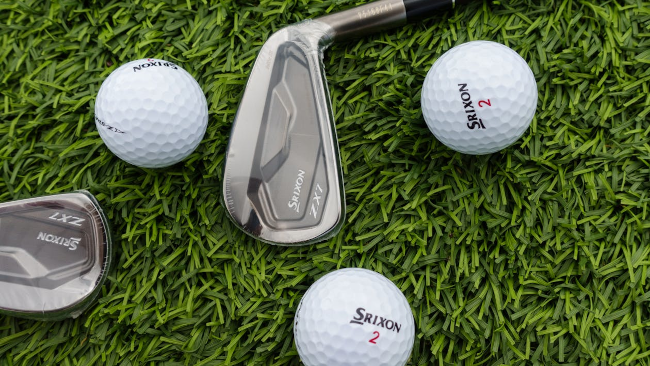
4. Srixon 2025 UltiSoft

The Srixon UltiSoft is Srixon’s softest ball with a compression score of 42, however this does not mean it compromises on power or distance! Delivering all-around performance across the course, the UltiSoft provides an ideal mix of distance and control. Featuring a FastLayer core, the UltiSoft is softer in the centre and gets progressively firmer towards the outside, providing penetrating launch and excellent distance of the tee.

The soft, thin cover of these Srixon balls also helps to provide more greenside spin and a softer feel on all pitches, chips and putts.


If you’re looking for more soft golf ball suggestions, you can filter specifically for “Soft Feel” balls when browsing our collection. Click the button below to get started!
Shop Golf Balls

Many golfers will tell you to go straight for the Titleist Pro V1 as this is the most popular ball in tournament play and it’s specifically designed for distance. However, there are lots of other distance golf balls on the market, and depending on your skill level, you may find that your shots go further if you look beyond the Pro V1. Many golf balls are even specifically designed to travel long distances, like the TaylorMade Distance+ Tour Response golf balls - but do these designs actually work out on the course?

An experiment by My Golf Spy in 2023 used a robot arm to figure out the best balls for different swing speeds. So, if you want to know which golf balls will go the furthest for you, it helps to know your swing speed first.


Asses Your Skill Level

Distance is impacted by your swing speed. Most new golfers will have a slow swing speed, and in this case, it can be helpful to use a softer golf ball. Softer balls tend to be more forgiving, flying further when hit at low speeds.

However, if you find that you’ve got a very high swing speed, a soft ball could actually result in less distance. You’ll usually want a harder ball if your drives are connecting at high speed.

Soft Golf Balls    Hard Golf Balls

Whatever your swing speed, it’s a good idea to test different balls to see what works well for your skill level. Once you know your swing speed, you can use the below information from My Golf Spy as a guideline for the kind of ball you may need.


Farthest-Flying Golf Balls for Fast Swing Speeds

According to the golf ball experiment, the Titleist Pro V1x Left Dash went the furthest when using a high swing speed driver (115 mph). This was closely followed by the Titleist Pro V1x and the Mizuno RB Tour X golf balls.

Farthest-Flying Golf Balls for Medium Swing Speeds

With a mid-swing speed driver (100 mph) the balls that went the longest distance were the Titleist Pro V1x, the Callaway Chrome Soft X LS, and the Titleist Pro V1x Left Dash golf balls.


Farthest-Flying Golf Balls for Slow Swing Speeds

With a low swing speed (85 mph) the ball that went furthest was the Vice Pro Plus, followed by the Titleist Pro V1x Left Dash, and then the Srixon Z-Star Diamond golf balls.


Which Golf Ball Is Right For You?

Since these results were under test conditions, you might find that you get different distances on the actual course. These distances were achieved using a driver – results may vary when using other clubs.

There are also a couple of other factors to consider when choosing a ball for distance.

If you’re an experienced golfer, you may be used to a particular ball already, and suddenly switching balls could negatively impact your game. This doesn’t mean that you should never switch! But you might need to practise a bit with the new ball before you take it into any tournaments.

Budget can also be a big factor. Though we mentioned the Titleist Pro V1 balls earlier, these are high-end balls that are usually for experienced players. You’ll see that many of the balls mentioned above are also from top brands. If you are a new player, you’ll probably want a ball that travels a lot, but costs a little.


Golf Balls That Go The Distance

At gimmeballs, we offer a huge range of brands at different price points, to cater to all sorts of golfers. Have a quick scroll through our golf balls page to see which balls are right for you!

You can even filter specifically for “Distance Balls” when shopping with us, so you’ll only see balls designed for this purpose.

Shop Golf Balls

If you’re interested in sampling multiple balls to see which one would work best for you, then you can try our Build a Box! This way, you can order a selection of great balls in one helpful package.

Build a Box

Callaway or Wilson? Yellow or white? Soft or hard? At gimmeballs, we know that picking the right golf ball can be a tough decision. We also know that picking a ball that is tailored to your playing style, skill level and personal preferences makes a world of difference when it comes to your game.

In this blog, we will be unpacking the key differences between hard and soft golf balls to help you find the par-fect ball that elevates your playing!

what do the numbers on golf balls mean

Numbers on golf balls are usually either there to help players identify the ball, to demonstrate compression-rating, or to show dimple pattern. But how do you tell which is which? This simple guide will explain the different meanings behind golf ball numbers, and how to know what your golf ball is trying to tell you.

These numbers can be very important. In fact, the number printed on your golf ball might even impact your game!


What are the numbers on golf balls?

More often than not, if there is a number printed on your golf ball, it’ll be either a one-digit number, a two-digit number or a three-digit number. Let’s take a closer look at what these numbers mean.


One-Digit Numbers

If there’s just one, single-digit number printed on your golf ball, then the number itself doesn't have a meaning. It’s just there to make it easier to identify on the course. For example, if everyone you’re playing with is using the same golf balls as you, the different numbers printed on the balls will help you to determine which ball belongs to which player. Your Pro V1s might say 2, when your competitors' balls all say 3!

Golf ball identification is pretty important. In match play, hitting the wrong ball will incur a loss of hole penalty. In stroke play, hitting someone else’s ball results in a two-stroke penalty.

Sometimes numbers aren't enough, so to make them even easier to identify, golfers will mark or personalise their balls. Purchasing personalised golf balls makes golf ball identification simple, without having to get right up close to read a tiny number.

So, if you find yourself squinting to find your ball on the course, you might want to consider purchasing some personalised golf balls.


Two-Digit Numbers

But what's the meaning of Two-digit numbers on golf balls? These numbers have a very specific meaning: they’re typically a representation of the compression rating.

Though you won't often see two-digit number on golf balls any more, you should stay aware of this, as compression ratings are very important for golfing. Compression ratings can range from low to high and different ratings are better suited to different skill levels. Golf ball compression, put simply, refers to how ‘soft’ the ball is. Low compression equals a ‘soft’ feel and high compression equals a ‘hard’ feel.

As a general rule, balls with a lower compression rating are best suited to players with a high handicap and high compression balls are better suited to more advanced players with lower handicaps. For example, low compression balls require less energy transfer from the club head to travel further. Beginner golfers and players with high handicaps often have a slower swing speed, so a low compression ball will enable them to exert the energy of their swing into optimal distance.

Therefore, the two-digit number printed on your ball has a pretty important meaning! Keep an eye out for them next time you purchase golf balls - it could have a big impact on your game.


Three-Digit Numbers

What do three-digit numbers on golf balls mean? These are the number of dimples on your golf ball!

All golf balls feature unique dimple patterns that can affect the ball’s performance in different ways. A three-digit number on a golf ball tends to signify how many dimples that ball has.

The number of dimples and the dimple pattern will vary depending on the manufacturer. Generally, a golf ball will have between 300 and 500 dimples. So, you’ll likely notice a number in this range printed on your ball.


Personalised Golf Balls

Golf ball numbers not enough for you? Personalise your golf balls. Here at gimmeballs, we stock a wide range of high-quality golf balls from top brands like Srixon, TaylorMade and Titleist. Simply choose a brand, choose a ball, then add a custom image, text or alignment line to help you identify your ball with ease or to help line up your putts.

Shop Personalised Golf Balls

soft golf balls better for beginners


Golf balls are among the hardest sports balls in the world. So, you might be surprised to learn that you can grade a golf ball by softness. What does softness mean for golf balls, and are soft golf balls better for beginners? Read on to find out.

golf balls

Golf balls consist of at least two components: the core and the cover. Each is made of different materials, which all combine to make the modern golf ball a marvel of sporting science.

golf ball compression explained

You've probably heard all about soft golf balls and hard golf balls., but have you ever wondered why it matters, and what does it means? Today, we're going to go through all you need to know about golf ball compression and why it's important to consider before you launch into your next game.